

To Create, or Computer-generate? That is the Question.
What art history can teach us about the AI revolution.

The industrial and technological age has done much to alter the workplace. Not the least of its influence has been the virtual extinction of the artist/craftsperson, who valued the process of his or her work as much as (if not more than) the product. The experience of doing the work was as important as the result of the work itself. Now the artist/worker has become an employee in a job, for the purpose of achieving and surviving. The linear ladder of success, based on reaching a series of goals, is the operable image, and spirit and soul are lost in the course of the doing. (True Work: The Sacred Dimension of Earning a Living, Willis & Tom, 1998, p. 20)
As a society, we have been here before. Sort of.
During the Industrial Revolution, machines replaced human labor, speeding up the production of material goods.
Today, chatbots powered by artificial intelligence (AI), such as ChatGPT, threaten to replace knowledge workers, or jobs for people who think for a living.
ChatGPT’s eerily convincing responses to wide-ranging questions spurred an initial explosion of enthusiasm. But, two and a half years after its initial release, both the users and creators of this popular chatbot are facing its limitations. The information presented is not always factually correct. Stylistically, the writing is detectably robotic. If you’re using ChatGPT to compose emails, texts, and blog articles, most of the time, people can tell.
The technological advances of the Industrial Revolution transformed the production of tangible goods. Today, the broad adoption of chatbots like ChatGPT is transforming the intangible outputs of knowledge work, such as problem-solving, innovation, and communication.
However, what is our reliance on this new tool doing to us?
Technology changes the outputs of labor, but it also changes the worker.
As users of this new technology, what do we lose, what do we gain, and what is the trade-off?
Let’s look back in history to learn about what might lie ahead.
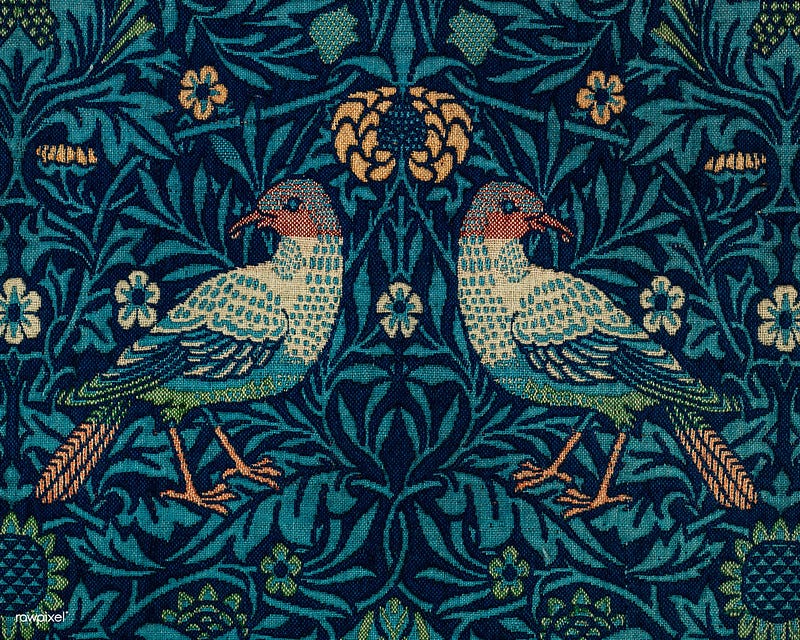
The Arts and Crafts Movement: Creatives and Scholars Respond to the Industrial Revolution
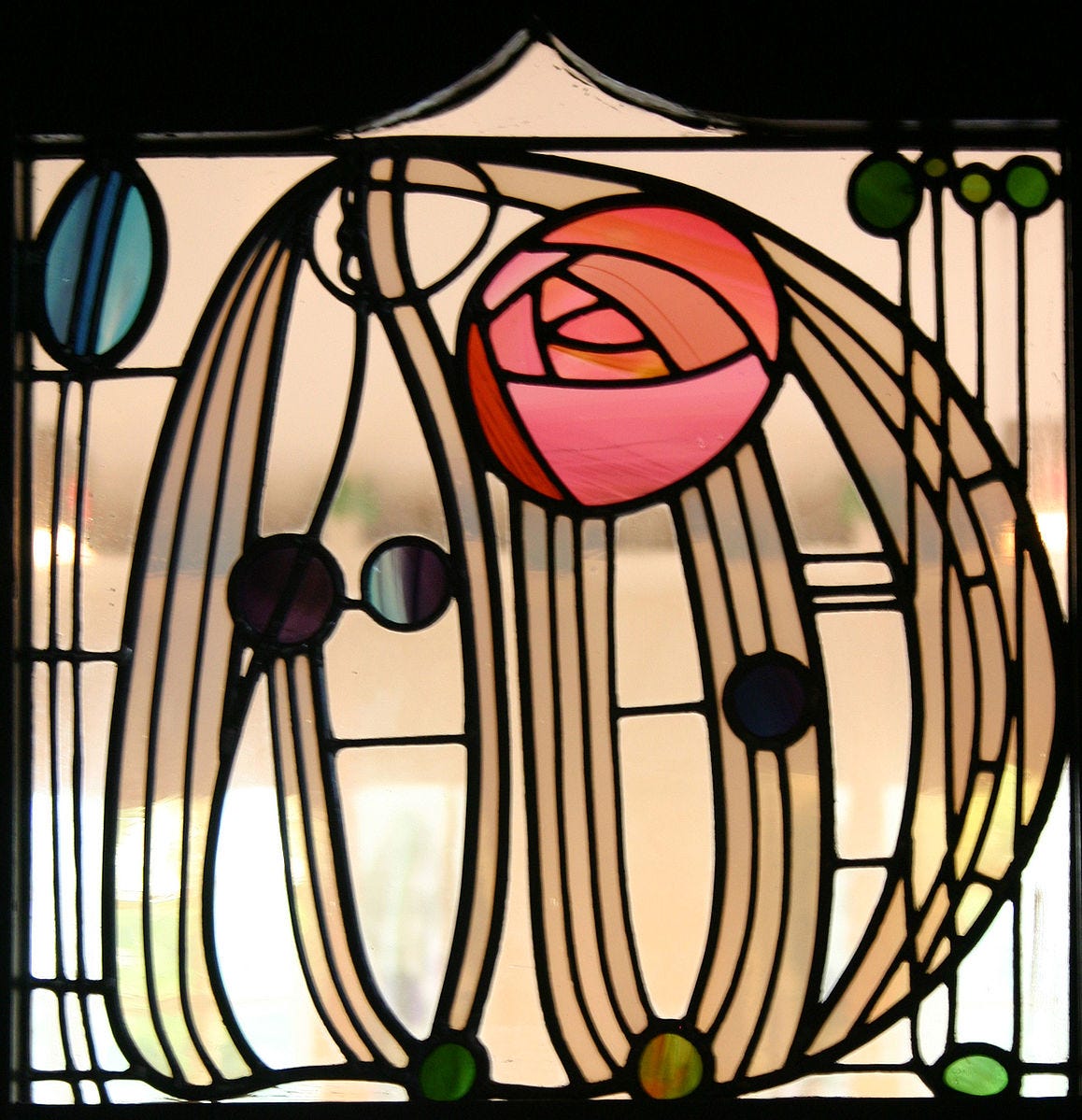
The Arts and Crafts movement was a design movement that celebrated handmade craft production over industrial manufacturing. It emerged in the late 1800s as a criticism of manufactured goods’ "novelty without beauty, or beauty without intelligence." (Lectures on the Results of the Great Exhibition of 1851)
In American Arts & Crafts: Virtue in Design, Leslie Greene Bowman summarizes the critique of manufactured style by John Ruskin, Oxford University’s first art history professor:
Censuring the products of machinery as monotonous, uninspiring goods that disassociated their users from contact with human creativity, Ruskin crusaded for hand labor as an essential human right that preserved dignity and inventiveness in society. He suggested that the designer and craftsman should be reunited in a single individual, that ‘the workman ought often to be thinking, and the thinker often to be working.’ [emphasis added]
In summary, critics complained that the outputs of manufacturing lacked human ingenuity and were uninspiring. More broadly, for industrialized society, the separation of the thinker (designer) and the maker (machine) was causing a decline in human dignity and inventiveness.
Generating Text with a Chatbot: What is it and Why Should I Care?
Similarly, today, chatbots are separating the thinking and the making. The big difference is that the outputs of this technology are not the fabric arts, print, or pottery of the late 1800s. They’re emails, blog posts, and reports. And it’s not just the letters and words of the writing itself. It’s the ideas that are conveyed in those texts that are being replaced by this technology.
So, if we’re using a new tool to replace the ideas we’re trying to communicate, we should probably understand how this tool works.
There are many explainer articles on how ChatGPT and similar tools work, but here is a very brief (and debatably over-simplified) summary.
How to Build an AI-powered Chatbot
Imagine building a computer program. Its goal is to predict the most likely sequences of words that should occur together, based on all the texts it has seen before.
The way you train this program is by having it “read” almost all of the internet.
Then, it can predict the most probable next word and assign a probability to that next word, like this:
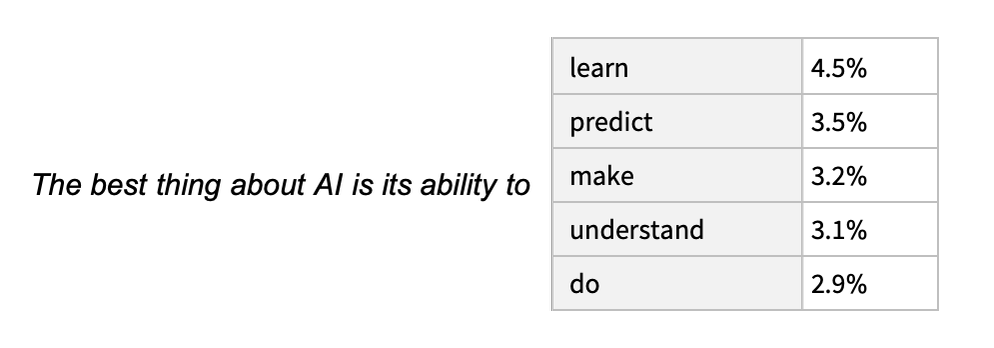
From Wolfram Writings: “What is ChatGPT Doing … and Why Does It Work?” Scale up the complexity of this program to predict groups of words. At the same time, make the outputs grammatically correct, logically sound, meaningful to humans, and factually correct as much as possible (using advanced computational methods that are outside the scope of this article).
What We Lose with Blind Faith in Chatbot Assistants
When we rely on chatbots for writing and reasoning, we are giving up human cognition in exchange for words that, based on statistics, have occurred together in past texts (plus some rules and constraints programmed in).
The issues with the outputs are more than just a matter of style. For one, new texts are being written that perpetuate ideas that were written in the past: ideas that, as a society, we don’t want to repeat, such as racial bias. When we reduce the products of knowledge work to statistically co-occurring words, we are bound to reiterate and reinforce narratives from the past.
And what does it do to the human who is using the chatbot?
They lose practice with human skills, such as communication.
Communication is for meaning-making with another person, to experience shared understanding. Language development in early childhood progresses when a baby’s movements and cries are insufficient to convey their message to their caregiver. By using words, the young child is able to express themselves in ways that are otherwise not understood. Their messages may be simply to convey wants and needs at first, but then progress to more complex words and concepts that facilitate relationship building.
The act of communication and shared meaning-making is also at the heart of all creative works. Although an artist or writer may begin their work alone in their studio or office, the outcome is not completed until it is viewed by others. Marcel Duchamp wrote, “All in all, the creative act is not performed by the artist alone; the spectator brings the work in contact with the external world by deciphering and interpreting its inner qualifications and thus adds his contribution to the creative act.”
Although chatbot-generated text may be functional or grammatically correct, it may not resonate or ring true with the audience. And why would it? It’s a computer program that uses advanced statistics and encoded rules to predict the next group of words.
What it’s not doing, that humans are doing, is creating something that is designed for shared meaning-making and relationship building. In the article, “What Is ChatGPT Doing … and Why Does It Work?,” Stephen Wolfram writes:
Human language is fundamentally imprecise, not least because it isn’t “tethered” to a specific computational implementation, and its meaning is basically defined just by a “social contract” between its users. But computational language, by its nature, has a certain fundamental precision—because in the end what it specifies can always be “unambiguously executed on a computer”. Human language can usually get away with a certain vagueness. (When we say “planet” does it include exoplanets or not, etc.?) But in computational language we have to be precise and clear about all the distinctions we’re making. [emphasis added]
Where That Leaves Us: Discern Where “Craftsmanship” in Reasoning is Worth the Premium
Greene Bowman writes in her book, American Arts & Crafts: Virtue in Design:
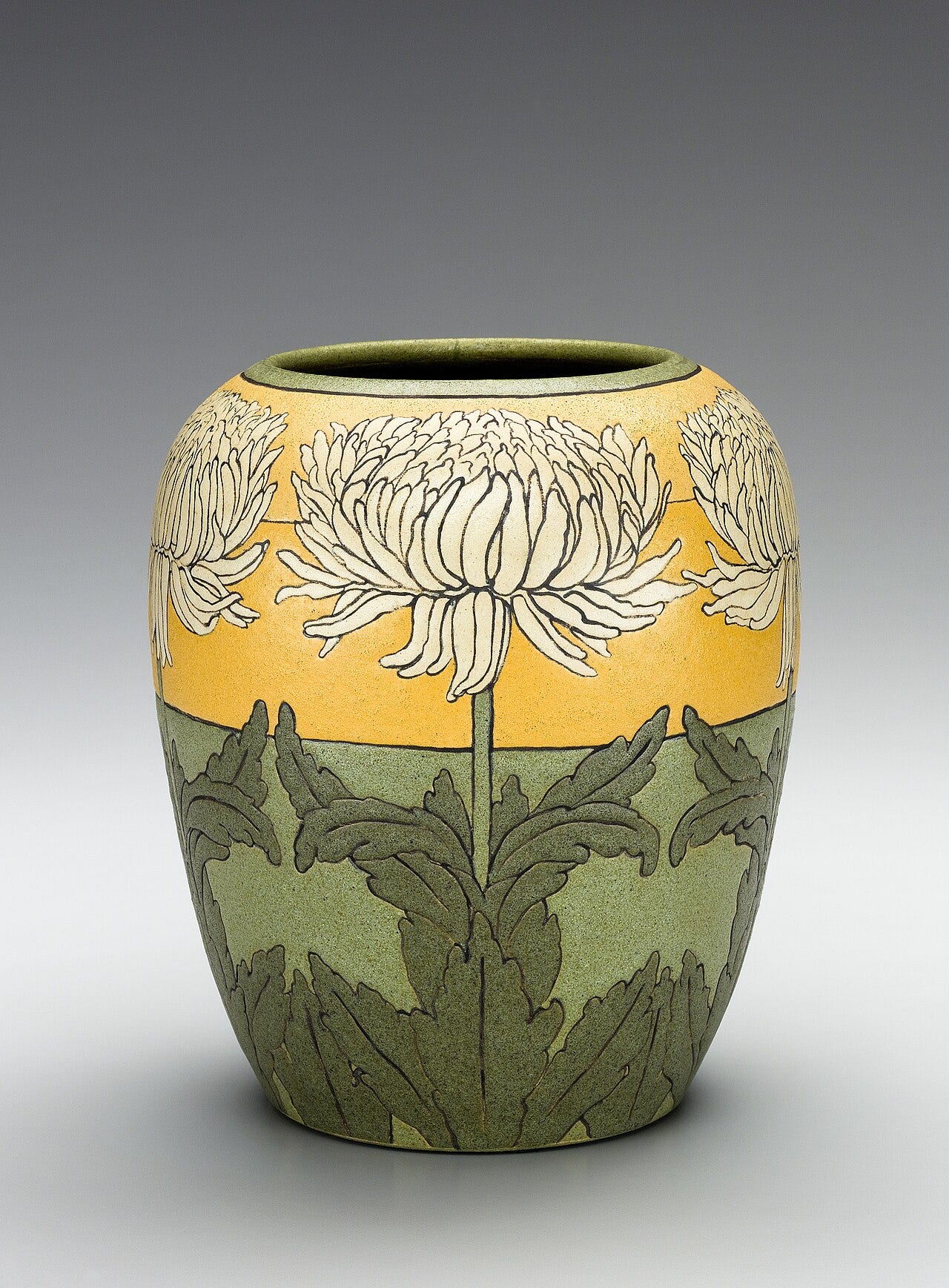
Paradoxically the crafts in America were not elevated out of industry into the fine arts, but instead were adapted into industry. Using English philosophies and rhetoric, American proponents successfully promoted the decorative arts as fine art handwrought by single craftsmen, despite the fact that most products were actually hybrids made by various hands and machines.
In a society where capitalism is the predominant operational economic philosophy, it’s unlikely that any movement that celebrates labor-intensive products will gain widespread traction. Although the Arts and Crafts movement sought to elevate the status of the craftsman, the design philosophy was incorporated into hybrid products made by both hands and machines. This eventually made the crafts accessible to more people, allowing these decorative arts to reach a wider audience.
Today, chatbots and other AI-powered tools are making knowledge work more accessible. Small businesses and large enterprises alike are cutting costs and saving money by leveraging these tools, instead of hiring more employees.
But what tasks require critical reasoning and creativity by humans? And what makes sense to assign to a machine? What’s worth the extra premium on human labor versus the more affordable, machine-made output, when it comes to knowledge work? These are the questions that we as a society are contending with today.
To start, I will propose some guiding principles from themes that emerged throughout this article.
Areas of knowledge work where we should invest in humans to guide the outcome:
Ethics: when people’s well-being or harm is in question
Progress/Innovation: when you don’t want to rely on the past to guide the future
Aesthetics: when style and resonance matter more than precision
Parting Thoughts
So, how can we lean into being human, in a world increasingly saturated with computer-generated outputs?
Grace Kim, PhD is a data and AI consultant helping organizations navigate technological change. Learn more about her work at mappinginsight.com.
Acknowledgements
Thanks to my life partner for our many meandering conversations on wide-ranging topics, including art history.
Working with early intervention and other support providers for my young children has influenced my understanding of human development and how humans get their human-ing skills.
Inspiration from Kurt Vonnegut’s writings. Many of his novels touch on themes of the inherent value of human life and the role of technology in society.
Nicole Williams, writer/editor, for editorial review of this post. Check out her environmental journalism on Substack and Muck Rack.